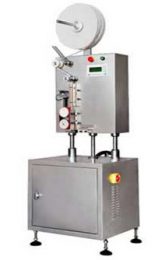


Automatic Turn Table for Bottle Packaging Line | Multipack Machinery

Automatic Turn Table for Bottle Packaging Line
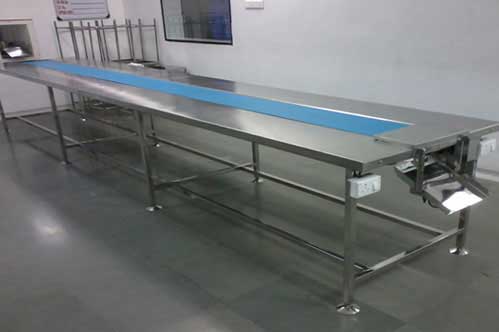
The Packing Conveyor is a material-handling system designed to transport bottles, containers, and compatible packaged products through packing and inspection workstations. It supports the movement of containers from upstream packaging machines to manual packing stations or other downstream operations.
A packing conveyor helps maintain an organized product flow during bottle collection, visual inspection, carton loading, and secondary packaging activities. It can be configured according to the container dimensions, required conveyor length, working height, product flow, and available production space.
Multipack Machinery offers packing conveyor solutions for pharmaceutical, food, beverage, cosmetic, personal care, and chemical packaging applications. The conveyor can be integrated with compatible filling, capping, labelling, and other packaging equipment according to the production-line layout.
What Is a Packing Conveyor?
A packing conveyor is a powered or appropriately configured conveyor system used to move products through a packing area. In bottle packaging applications, it commonly transports containers toward operators or workstations for inspection, grouping, carton placement, or other packing activities.
The conveyor provides a defined path for product movement and can be designed as a standalone unit or as part of a larger automatic packaging line.
Working Principle
The packing conveyor operates by moving a belt or another suitable conveying surface through a drive system.
- Product infeed: Bottles or compatible containers enter the conveyor from an upstream machine or loading point.
- Product transportation: The drive system moves the conveying surface to transport products along the conveyor.
- Packing and inspection: Operators can inspect, collect, group, or pack products at designated workstations, depending on the line layout.
- Product discharge: Containers are transferred to a packing station, collection area, carton-loading operation, or another downstream machine.
- Continuous operation: Conveyor speed and product flow are coordinated with the connected equipment and the required handling process.
The conveyor arrangement, speed control, and operator positions depend on the application.
Salient Features
- Designed for product movement through packing and inspection areas.
- Suitable for bottle and compatible container handling.
- Available in different conveyor lengths and widths.
- Working height and layout can be configured for the application.
- Can be integrated with compatible filling, capping, and labelling machines.
- Suitable for manual packing and selected automated line arrangements.
- Side guides can be provided where required.
- Belt and frame materials can be selected according to product and environmental requirements.
- Speed control can be specified where needed.
- Designed to support organized product transfer and workstation operation.
Main Components
- Conveyor frame
- Conveyor belt or selected conveying surface
- Drive motor and gearbox
- Drive and idler rollers or sprockets, depending on design
- Belt tensioning and tracking arrangement
- Supporting legs and mounting structure
- Side guides, where required
- Electrical control arrangement
- Optional speed controller
- Applicable guarding and emergency stop provisions
The final component selection depends on conveyor type and customer requirements.
Product and Container Compatibility
A packing conveyor can be configured for handling compatible products such as:
- Plastic bottles
- Glass bottles
- PET and HDPE containers
- Pharmaceutical bottles
- Cosmetic and personal care containers
- Food and beverage containers
- Jars and selected rigid containers
- Compatible cartons, packs, or other products where the conveyor is designed for them
Container dimensions, base stability, weight, surface condition, and conveying orientation should be reviewed before selecting the belt and guide arrangement.
Technical Specifications
| Parameter | Typical Configuration |
|---|---|
| Machine type | Packing conveyor |
| Primary function | Product transportation through packing areas |
| Conveyor length | Customized according to layout |
| Conveyor width | Selected according to product dimensions |
| Conveyor height | Fixed or customized |
| Conveyor surface | Belt or other suitable conveying surface |
| Drive system | Electric motor and gearbox |
| Speed control | Optional or model-dependent |
| Frame material | Stainless steel or powder-coated construction, as specified |
| Product type | Bottles, containers, or compatible packaged products |
| Side guides | Optional or application-dependent |
| Operating arrangement | Standalone or integrated packaging line |
| Electrical controls | According to selected configuration |
Final dimensions, materials, motor rating, speed range, and load capacity should be confirmed in the machine quotation and approved technical specifications.
Conveyor Speed and Handling Capacity
The handling capacity of a packing conveyor depends on its speed, belt width, product spacing, container dimensions, operator requirements, and the output rate of connected equipment.
For manual packing operations, the conveyor should be designed to provide a manageable product flow for operators. For automatic lines, conveyor speed and transfer points should be coordinated with upstream and downstream machines.
A conveyor’s transport speed should not be treated as the guaranteed production output of the complete packaging line.
Product Handling and Flow
The packing conveyor is intended to provide a stable conveying path for compatible products. Belt selection, side guides, transfer points, and speed adjustment can influence product stability and handling performance.
For glass bottles or containers with a narrow base, the conveyor arrangement should be selected to minimize unnecessary movement and reduce the risk of tipping or collision.
Hygiene and Construction
Construction materials should be selected according to the industry, product environment, and cleaning requirements. Stainless steel options may be appropriate for pharmaceutical, food, beverage, cosmetic, and personal care applications.
The suitable belt material, frame finish, and cleanability depend on whether the conveyor operates in a general packing area, a washdown environment, or a controlled production area. Specific material grades and hygienic design requirements should be confirmed for the application.
Optional Features
Depending on the selected configuration, the packing conveyor may include:
- Variable speed control
- Customized conveyor length and width
- Adjustable working height, where suitable
- Side guides or product guide rails
- Stainless steel construction options
- Multiple operator workstations
- Customized infeed and discharge arrangements
- Collection tables or turn table integration
- Sensors or controls for selected line applications
- Additional guarding and safety provisions
Optional features should be confirmed during technical discussions.
Packaging Line Integration
A packing conveyor can be integrated with:
- Bottle filling machines
- Bottle capping machines
- Bottle labelling machines
- Bottle washing or air-jet cleaning machines
- Inspection and rejection systems
- Shrink sleeve labelling machines
- Shrink tunnels
- Cartoning and secondary packaging equipment
- Turn tables and collection stations
- Manual packing and carton-loading workstations
The conveyor length, transfer height, speed, and control arrangement should be selected to suit the complete line layout.
Applications
Packing conveyors are commonly used for transporting products through:
- Bottle inspection and collection
- Manual packing operations
- Carton-loading workstations
- Bottle grouping and arrangement
- Secondary packaging areas
- Container transfer between packaging machines
- Selected product-handling and assembly operations
Industries Served
- Pharmaceutical manufacturing
- Nutraceutical and herbal products
- Food and beverage processing
- Cosmetics and personal care
- Home care and detergent manufacturing
- Chemical manufacturing
- Contract packaging and bottling
Benefits of a Packing Conveyor
- Supports organized product movement through packing areas.
- Helps reduce repeated manual carrying of containers.
- Provides a defined conveying path between workstations.
- Supports integration with compatible packaging machines.
- Can be configured for different product dimensions and layouts.
- Helps operators access products during inspection and packing.
- Supports flexible production-line arrangements.
- Can be designed to suit available floor space and workflow.
Changeover and Adjustment
Changeover requirements depend on the products and conveyor design. When changing between bottle formats, operators may need to adjust side guides, transfer arrangements, or other product-handling components.
For operations involving several container sizes, confirm the guide adjustment range, belt compatibility, and required changeover time before selecting the conveyor.
Safety and Maintenance
The conveyor should be operated according to the manufacturer’s instructions. Moving belts, drive rollers, and other moving parts should have appropriate guarding where required. Emergency stops and safe access should be provided according to the conveyor design and installation.
Routine maintenance may include checking belt tension and tracking, inspecting the belt surface, checking drive components, tightening fasteners, and inspecting electrical connections. Cleaning should follow the manufacturer’s instructions and the selected belt and frame materials.
How to Select the Right Packing Conveyor
Before choosing a packing conveyor, confirm:
- Product type and dimensions.
- Maximum product weight.
- Required conveyor length and width.
- Required working height.
- Desired conveying speed and line output.
- Manual or automatic packing requirements.
- Number and position of operator workstations.
- Required belt and frame materials.
- Cleaning and environmental requirements.
- Infeed and discharge machine details.
- Available floor space and line layout.
Why Choose a Packing Conveyor from Multipack Machinery?
Multipack Machinery provides packaging and product-handling equipment for manufacturing and packing operations. Packing conveyor configurations can be discussed according to product dimensions, line speed, workstation layout, construction requirements, and integration with existing or new packaging machinery.
For an appropriate configuration, share the product type, conveyor dimensions, required speed, and details of the machines to be connected.
Frequently Asked Questions
What is a packing conveyor used for?
A packing conveyor transports bottles, containers, or compatible products through packing, inspection, collection, and other product-handling operations.
Can a packing conveyor be connected to a filling machine?
Yes. It can be integrated with a compatible filling machine and other packaging equipment, subject to conveyor height, transfer arrangement, speed, and control requirements.
Can a packing conveyor be used for manual packing?
Yes. It can transport products past operator workstations for inspection, grouping, carton placement, or other manual packing activities.
Is the packing conveyor available in different sizes?
Conveyor length, width, and working height can be specified according to the product dimensions, production layout, and handling requirements.
Can conveyor speed be adjusted?
Speed control may be available depending on the selected model and drive arrangement. The required speed range should be confirmed when specifying the conveyor.
Which materials are used for a packing conveyor?
The frame and conveying surface depend on the application. Stainless steel and suitable belt materials can be specified according to product compatibility, cleaning requirements, and the production environment.
Can the conveyor handle glass bottles?
A suitable configuration can be designed for compatible glass bottles. Bottle stability, base dimensions, belt selection, guide arrangement, and transfer points must be considered.
Can a packing conveyor be integrated with a turn table?
Yes. A compatible packing conveyor can be arranged with a turn table or collection station, provided that the transfer heights, product flow, and layout are suitable.
How is packing conveyor capacity determined?
Capacity depends on conveying speed, product dimensions, product spacing, workstation requirements, and the performance of connected equipment.
Can Multipack Machinery customize a packing conveyor?
Configuration options can be discussed based on the required dimensions, product type, conveyor speed, construction material, and packaging-line layout.
Looking for a packing conveyor for your production or packaging line?
Contact Multipack Machinery at www.multipackmachine.com to discuss your product dimensions, conveyor size, required speed, and line integration requirements.