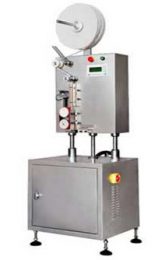


Online Check Weigher Machine | Automatic Weight Checking System

Online Check Weigher Machine for Automatic Weight Inspection
The Online Check Weigher Machine is an in-line inspection system designed to measure the weight of individual products as they move along a production or packaging conveyor. It helps manufacturers identify products that fall outside predefined weight limits and supports consistent quality control during production.
The machine can be integrated into packaging lines handling bottles, jars, pouches, cartons, boxes, and other compatible products. During operation, each product passes through a weighing section where its weight is measured and compared with the preset acceptable range. Products within the specified limits continue along the line, while underweight or overweight products can trigger an alarm or an automatic rejection mechanism, depending on the selected configuration.
Multipack Machinery offers checkweigher solutions for industrial packaging and production applications. The system can be configured according to product dimensions, weight range, required line speed, weighing performance, and rejection requirements.
An online checkweigher can help improve weight consistency, reduce excessive product giveaway, identify filling or packing variations, and support quality inspection before products proceed to the next packaging stage.
What Is an Online Check Weigher?
An Online Check Weigher, also called an Inline Checkweigher or Automatic Checkweigher Machine, is a dynamic weighing system installed directly into a production or packaging line.
Unlike a standalone weighing scale used for individual manual checks, an online checkweigher measures products while they are conveyed through the machine. The measured weight is compared with predefined lower and upper weight limits to determine whether the product meets the selected acceptance criteria.
Depending on the configuration, the system may include a display, product counter, alarm, weight data recording, and an automatic reject mechanism for products outside the acceptable range.
Working Principle of an Online Check Weigher
The online checkweigher works through controlled product conveying, dynamic weight measurement, and comparison with preset weight limits.
Product Infeed
Products enter the checkweigher from an upstream conveyor or packaging machine. The infeed section helps maintain suitable spacing so that individual products can be weighed correctly.
Dynamic Weight Measurement
Each product passes over the weighing conveyor or weighing platform. A weighing sensor, commonly a load cell, measures the force applied by the product and provides a signal to the weighing controller.
Weight Evaluation
The controller processes the measurement and compares the result with the programmed target weight and acceptable upper and lower limits.
Product Acceptance or Rejection
Products within the programmed range continue to the next operation. Products outside the acceptable range can activate an alarm or be diverted by an automatic rejection system, if provided.
Display and Monitoring
Depending on the selected control system, the machine can display measured weight, accepted and rejected product counts, and other available production information.
Salient Features
- Dynamic in-line weight checking during production.
- Identification of underweight and overweight products against configured limits.
- Suitable for integration with compatible packaging conveyors.
- Digital weight display and operator control interface, depending on configuration.
- Optional automatic rejection system.
- Adjustable weight limits for supported product formats.
- Suitable for a range of product sizes and packaging types within the specified machine limits.
- Optional product counting and production statistics.
- Optional product recipe storage and data recording.
- Configurable conveyor dimensions and working height.
- Integration options for compatible upstream and downstream equipment.
- Designed to support weight inspection without routine manual weighing of every product.
Main Components
Infeed Conveyor
Transfers products into the checkweigher and helps establish suitable product spacing before weighing.
Weighing Conveyor
Carries the product through the weighing zone while the weighing system measures its weight.
Load Cell or Weighing Sensor
Measures the force applied by the product and converts it into a signal used to determine the weight.
Control System
Processes the weight signal and compares the measured result with the configured acceptance limits.
HMI or Display Panel
Allows operators to view weight information and configure available operating parameters, depending on the supplied control system.
Outfeed Conveyor
Transfers inspected products to the next packaging or handling operation.
Rejection Mechanism
An optional or specified mechanism removes products that fall outside the programmed weight limits. The mechanism may be selected according to the product and line configuration.
Machine Frame and Electrical System
Support the conveyor and weighing assembly and provide the required electrical power and control functions.
Product and Packaging Compatibility
An online checkweigher can be configured for compatible products such as:
- Filled pharmaceutical bottles
- Syrup and oral liquid bottles
- Cosmetic and personal care bottles
- Shampoo and lotion containers
- Food and beverage packages
- Pouches and sachets
- Cartons and boxes
- Jars and rigid containers
- Chemical and detergent containers
- Other compatible packaged products
Product compatibility depends on the weighing range, package dimensions, conveyor design, stability, and required production speed.
Technical Specifications
| Parameter | Typical Configuration |
|---|---|
| Machine type | Online dynamic checkweigher |
| Primary function | In-line product weight inspection |
| Weighing method | Dynamic weighing on a conveyor |
| Weighing sensor | Load cell or specified weighing sensor |
| Weighing range | Selected according to product weight |
| Product dimensions | Configured according to application |
| Conveyor arrangement | Infeed, weighing, and outfeed sections as required |
| Operating speed | Dependent on product, accuracy, and configuration |
| Weight limits | Programmable within the supported control range |
| Display | Digital display or HMI, depending on model |
| Rejection system | Optional or configuration-dependent |
| Rejection method | Selected according to product and line requirements |
| Product counter | Optional or model-dependent |
| Weight data recording | Optional or model-dependent |
| Frame construction | Material selected according to application |
| Conveyor belt | Selected according to product and operating environment |
| Line integration | Customized according to packaging layout |
| Installation | Standalone in-line unit or integrated production-line system |
Final weighing range, throughput, achievable accuracy, product dimensions, materials, and control features should be confirmed for the specific model before purchase.
Production Capacity and Line Speed
The operating capacity of an online checkweigher depends on product dimensions, weight range, package spacing, conveyor speed, weighing performance, and the selected rejection mechanism.
The checkweigher should be specified according to the actual production rate of the upstream filling or packaging machine. The system must have sufficient time and suitable product spacing to measure each product reliably.
High line speed alone does not guarantee accurate weighing. Product stability, vibration, spacing, and the performance of the weighing system also affect results.
Weighing Accuracy and Quality Control
The purpose of an online checkweigher is to measure the weight of individual products and identify deviations from configured acceptance limits.
Achievable weighing accuracy depends on the weighing range, product characteristics, conveyor speed, vibration, environmental conditions, machine setup, and calibration.
The system can help identify trends associated with inconsistent filling or packing. However, it does not automatically correct the filling process unless suitable feedback and control integration are specifically provided.
A checkweigher measures weight or mass. It does not directly measure liquid volume. For liquid products, the relationship between measured weight and fill volume depends on product density, container tare weight, and the applicable measurement method.
Underweight and Overweight Detection
The machine compares each measured product weight against the programmed limits.
Underweight Detection
Products below the configured lower weight limit can be identified for rejection or operator inspection. This can help identify potential underfilling, missing contents, or incomplete packaging.
Overweight Detection
Products above the configured upper weight limit can be identified to help monitor excessive filling, excess material use, or packing variation.
Weight-Based Quality Monitoring
The recorded measurements and accepted/rejected counts, where available, can help production teams monitor process consistency and investigate recurring weight deviations.
Optional Features
Depending on the selected model, the online checkweigher may be configured with:
- Automatic product rejection mechanism.
- Reject confirmation sensor.
- Reject collection bin or container.
- Touchscreen HMI.
- Multiple product recipes.
- Product counters and batch statistics.
- Weight data storage and reporting.
- Communication interfaces for compatible production systems.
- Adjustable conveyor speed.
- Customized conveyor height and dimensions.
- Stainless steel construction options.
- Additional guarding and safety features.
- Integration with upstream filling equipment for compatible feedback applications.
The availability of these features should be confirmed against the final machine specification.
Packaging Line Integration
An online checkweigher can be installed at a suitable point in the packaging line, commonly after filling or packing and before final case packing or dispatch.
It can be integrated with compatible equipment such as:
- Bottle filling machines
- Bottle capping machines
- Bottle labelling machines
- Pouch filling and sealing machines
- Cartoning machines
- Shrink packaging equipment
- Packaging conveyors
- Inspection stations
- Automatic rejection systems
- Case packing and secondary packaging lines
The integration layout should consider conveyor height, product spacing, line speed, electrical signals, reject handling, and access for operators.
Applications
Online checkweigher machines can be used for:
- Checking the weight of filled bottles.
- Monitoring the weight of pouches and sachets.
- Inspecting cartons and boxes.
- Identifying underweight or overweight packages.
- Detecting some missing components when their weight difference is measurable.
- Monitoring product weight consistency after filling or packing.
- Checking packaged products before secondary packaging.
- Supporting in-line weight quality control.
Missing-component detection is dependent on whether the weight difference is large enough to be detected reliably within the system’s configured limits.
Industries Served
- Pharmaceutical manufacturing
- Nutraceutical and herbal products
- Food and beverage processing
- Dairy and packaged food
- Cosmetics and personal care
- Home care and detergent manufacturing
- Chemical manufacturing
- Lubricants and industrial products
- Contract packaging and bottling
Benefits of an Online Check Weigher
- Provides in-line weight inspection during production.
- Helps identify products outside predefined weight limits.
- Reduces dependence on manual sample weighing for routine checks.
- Helps monitor excessive product giveaway.
- Supports consistent packaging quality.
- Can trigger automatic rejection of non-conforming products when configured.
- Helps production teams identify weight variations.
- Can be integrated into existing compatible packaging lines.
- Optional data recording supports production monitoring and quality review.
Product Changeover
When production changes from one product or package format to another, the checkweigher may require a new product recipe or adjustment of the weight limits.
Depending on the model and product dimensions, changeover may also involve adjustments to side guides, conveyor settings, product spacing, or rejection timing.
The required changeover process and supported product recipes should be confirmed during machine selection.
Construction and Hygiene
The frame, conveyor belt, and other exposed components should be selected according to the product and production environment.
Stainless steel construction may be appropriate for certain pharmaceutical, food, beverage, cosmetic, and personal care applications. Belt materials and cleaning arrangements should also suit the products being handled.
Where hygienic or washdown requirements apply, confirm the specified material grades, enclosure protection, cleaning method, and environmental suitability before finalizing the machine.
Safety and Maintenance
Operators should follow the manufacturer’s operating, cleaning, and maintenance instructions.
Routine maintenance may include:
- Checking conveyor belt condition and tracking.
- Inspecting the weighing conveyor and load cell mounting.
- Checking the machine’s level and stability.
- Keeping the weighing area free from product buildup.
- Inspecting electrical connections and sensors.
- Verifying rejection mechanism operation, where fitted.
- Performing calibration and verification checks according to the manufacturer’s procedure.
- Checking weighing performance after machine relocation or significant maintenance.
The weighing area should be protected from unnecessary vibration, mechanical contact, and other conditions that could affect measurement stability.
How to Select the Right Check Weigher
Before selecting an online checkweigher, confirm the following requirements:
- Minimum and maximum product weight.
- Product dimensions and packaging format.
- Required line speed in products per minute.
- Required weighing accuracy and tolerance limits.
- Whether the product is a bottle, pouch, carton, box, or another format.
- Whether automatic rejection is required.
- Preferred rejection mechanism and reject collection arrangement.
- Required display, reporting, and data storage functions.
- Construction material and cleaning requirements.
- Conveyor height and available installation space.
- Upstream and downstream machine details.
- Whether weight data must be communicated to another system.
Providing actual product samples and target operating conditions can help determine a suitable configuration.
Why Choose an Online Check Weigher from Multipack Machinery?
Multipack Machinery supplies packaging and inspection equipment for manufacturing and packaging applications. An online checkweigher can be specified according to the product weight range, packaging format, required line speed, weighing performance, and integration requirements.
The final configuration should be selected around the customer’s actual production conditions rather than relying on a generic capacity or accuracy figure.
For a suitable recommendation, share the product type, filled or packed weight, package dimensions, required production speed, and whether automatic rejection is required.
Frequently Asked Questions
What is an online checkweigher machine?
An online checkweigher is a dynamic weighing system that measures the weight of products as they move along a production or packaging conveyor.
What is the difference between a checkweigher and a weighing scale?
A conventional weighing scale is generally used for static weighing, while an online checkweigher measures products moving through a production line. The suitable equipment depends on the application and required weighing performance.
Can a checkweigher detect underweight and overweight products?
Yes. The system compares measured weight with configured lower and upper limits. Products outside the limits can trigger an alarm or automatic rejection, depending on the machine configuration.
Does an online checkweigher automatically reject incorrect products?
Automatic rejection is available when the machine includes a suitable reject mechanism and associated controls. Not every configuration necessarily includes automatic rejection.
Can a checkweigher be used for filled bottles?
Yes. A suitably configured checkweigher can inspect filled bottles and other compatible containers, provided the product dimensions, weight, and line speed fall within the machine’s operating range.
Can a checkweigher inspect pouches and cartons?
Yes. Compatible pouches, cartons, boxes, and other packages can be inspected when the weighing conveyor and machine specifications are suitable for the package format.
Does a checkweigher measure liquid volume?
No. A checkweigher measures weight or mass. Estimating liquid volume from weight requires additional information, including product density and container tare weight.
What affects checkweigher accuracy?
Accuracy depends on product weight, conveyor speed, package stability, product spacing, vibration, environmental conditions, setup, and calibration.
Can a checkweigher be connected to a filling machine?
A checkweigher can be integrated into a compatible filling line. Automatic adjustment of filling output requires an appropriate feedback and control arrangement and should not be assumed to be included in every system.
How is checkweigher capacity determined?
Capacity depends on the product dimensions, required weighing accuracy, conveyor speed, product spacing, and rejection system. The system should be selected based on actual production conditions.
Is stainless steel construction available?
Stainless steel construction may be available depending on the model and application. The required material grade and cleaning suitability should be confirmed in the technical specification.
Can Multipack Machinery customize a checkweigher?
The configuration can be discussed according to product type, weight range, package dimensions, required speed, rejection method, and line integration requirements.
Looking for an online checkweigher machine for your production or packaging line?
Contact Multipack Machinery at to discuss your product weight, package dimensions, required line speed, weighing accuracy, and automatic rejection requirements.