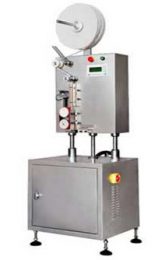


Induction Cap Sealing Machine On-line | Automatic Induction Sealer

Induction Cap Sealing Machine On-line
The Induction Cap Sealing Machine On-line is an automatic continuous sealing system designed for sealing aluminum foil liners onto the mouths of compatible bottles and containers. The machine operates on an inline conveyor and uses electromagnetic induction heating to bond the foil liner to the container neck without direct contact between the sealing head and the foil.
The machine is suitable for pharmaceutical, nutraceutical, food, beverage, cosmetic, chemical and FMCG packaging applications where tamper evidence, product protection and container sealing are required. Bottles can pass continuously through the induction sealing station after filling and capping.
The induction sealing system can be configured according to bottle material, neck diameter, cap and liner specifications, conveyor speed, production capacity and packaging line layout. It can be installed as an online unit within an automatic filling and packaging line.
What Is an Induction Cap Sealing Machine On-line?
An Induction Cap Sealing Machine On-line is an automatic bottle sealing machine that uses electromagnetic induction to heat and bond an aluminum foil liner to the container opening.
The sealing process takes place after the compatible cap has been applied to the bottle. As the capped bottle travels on the conveyor, it passes through the induction sealing head. The electromagnetic field heats the aluminum foil liner inside the cap, causing the sealing layer to bond with the bottle neck.
The process creates a sealed container without requiring direct contact between the induction head and the liner.
Working Principle
Bottle Infeed
Filled and capped bottles enter the induction sealing machine through the existing or integrated conveyor.
Bottle Positioning
Bottle guides maintain the required position and alignment as containers pass through the induction sealing zone.
Cap and Liner
The bottle is fitted with a compatible cap containing an induction liner consisting of an aluminum foil layer and suitable heat-sealing material.
Induction Heating
The capped bottle passes beneath the induction sealing head. Electromagnetic energy generates heat in the aluminum foil liner.
Foil Liner Sealing
The generated heat activates the heat-sealing layer and bonds the liner to the bottle neck.
Cooling
After passing through the induction field, the liner cools and forms a sealed bond with the container opening.
Continuous Discharge
The sealed bottle continues along the conveyor toward inspection, labeling, coding or secondary packaging.
Salient Features
- Automatic online induction sealing
- Continuous non-contact sealing process
- Suitable for integration into automatic packaging lines
- Aluminum foil liner sealing
- Adjustable induction sealing parameters
- Conveyor-based bottle handling
- Suitable for different bottle sizes with appropriate setup
- Digital control system
- Easy-to-operate control panel
- Bottle presence detection
- Sealing head height adjustment
- Overload and fault protection
- Stainless steel construction
- Compact inline design
- No direct contact between sealing head and liner
- Suitable for high-speed packaging applications
- Can be integrated with filling, capping, labeling and coding systems
- Suitable for tamper-evident packaging applications
Main Components
Stainless Steel Machine Frame
The frame supports the induction generator, sealing head, conveyor and control system.
Conveyor System
The conveyor continuously transfers capped bottles through the induction sealing zone.
Induction Generator
The induction generator supplies the required electromagnetic energy for heating the aluminum foil liner.
Induction Sealing Head
The sealing head is positioned above the conveyor and generates the electromagnetic field required for liner heating.
Bottle Guide Arrangement
Adjustable guides help maintain bottle alignment while passing through the sealing area.
Height Adjustment System
The sealing head can be adjusted according to bottle height and cap position.
Control Panel
The control panel allows the operator to set and monitor relevant sealing parameters.
Sensors
Sensors can detect bottle presence and monitor machine operation.
Cooling Arrangement
The machine can include suitable cooling arrangements for continuous operation of the induction generator and sealing system.
Bottle Compatibility
The Induction Cap Sealing Machine On-line can be configured for compatible containers such as:
- HDPE bottles
- PET bottles
- PP containers
- Plastic bottles
- Glass bottles
- Pharmaceutical containers
- Food containers
- Cosmetic containers
- Nutraceutical bottles
- Chemical containers
Induction sealing performance depends on container material, neck design, diameter, cap and liner combination.
Cap and Liner Compatibility
The machine is designed for caps containing compatible induction liners.
The liner can typically include:
- Aluminum foil layer
- Heat-sealing coating
- Backing material
- Suitable adhesive or sealing layer
The correct liner must be selected according to the container material and product requirements.
Cap and liner compatibility should be confirmed through trials using the actual production components.
Induction Sealing System
The induction sealing system provides non-contact sealing by generating an electromagnetic field around the capped bottle.
Important parameters include:
- Induction power
- Sealing speed
- Sealing head height
- Bottle neck diameter
- Cap and liner construction
- Container material
- Liner sealing temperature
- Conveyor speed
- Dwell time
The optimum parameters depend on the specific bottle, cap and liner combination.
Technical Specifications
| Parameter | Specification |
|---|---|
| Machine Type | Induction Cap Sealing Machine On-line |
| Operation | Automatic / Continuous |
| Sealing Method | Electromagnetic Induction |
| Sealing Type | Aluminum Foil Liner Sealing |
| Bottle Handling | Automatic Conveyor |
| Sealing | Non-Contact |
| Cap Type | Compatible Screw / Plastic Cap with Induction Liner |
| Bottle Material | PET / HDPE / PP / Glass, as applicable |
| Neck Diameter | As per customer requirement |
| Sealing Head | Inline Induction Head |
| Power | Application dependent |
| Conveyor Speed | Application dependent |
| Production Capacity | Application dependent |
| Control System | Digital Control / PLC as required |
| Machine Construction | Stainless Steel |
| Cooling | As required |
| Bottle Detection | Sensor based |
| Installation | Online / Conveyor Integration |
Production Capacity
The production capacity of an online induction sealing machine depends on:
- Bottle diameter
- Neck diameter
- Conveyor speed
- Sealing power
- Liner construction
- Required sealing time
- Bottle spacing
- Container material
- Product requirements
- Upstream and downstream machine speeds
The induction sealing system can be configured to match the required packaging line speed.
Actual output and sealing performance should be confirmed using production bottles, caps and liners.
Sealing Quality
Sealing quality depends on the correct combination of container, cap, liner, induction power, sealing head height and conveyor speed.
A properly configured system helps achieve:
- Consistent liner bonding
- Reliable container sealing
- Tamper-evident packaging
- Improved product protection
- Reduced risk of leakage
- Protection against external contamination
Final sealing parameters should be established through trials with the customer’s actual packaging components.
Bottle Handling
The online system allows bottles to move continuously through the induction sealing zone.
The conveyor and guide arrangement can be configured according to:
- Bottle diameter
- Bottle height
- Bottle shape
- Neck position
- Production speed
- Existing conveyor layout
Bottle alignment is important for maintaining a consistent distance between the induction head and the liner.
Cap and Liner Handling
The induction sealing machine does not normally apply the cap itself. The bottle should first be capped with a compatible cap containing the required induction liner.
A typical sequence is:
Bottle Filling → Cap Placement → Screw Capping → Induction Foil Sealing
The sealing system then bonds the liner to the container neck.
Inspection and Quality Control
Additional inspection systems can be integrated depending on the packaging requirements.
Possible inspection functions include:
- Bottle presence
- Cap presence
- Seal presence
- Seal integrity
- Incorrect sealing
- Missing liner
- Bottle position
- Machine fault
Vision inspection, seal inspection and automatic rejection systems can be incorporated where required.
Coding and Batch Marking
The induction sealing machine can be installed together with coding systems for printing:
- Batch number
- Manufacturing date
- Expiry date
- Product code
- MRP
- Lot number
- Variable production information
Coding can be performed before or after induction sealing depending on the packaging line arrangement.
Hygiene and Cleaning
The stainless steel machine surfaces and accessible components can be cleaned according to the requirements of the application.
Recommended cleaning includes:
- Conveyor surface
- Bottle guides
- Induction head exterior
- Machine frame
- Sensor surfaces
- Product-contact areas where applicable
- Cap and liner handling areas
Cleaning procedures should be established according to the product and industry requirements.
Optional Features
The Induction Cap Sealing Machine On-line can be configured with:
- Digital power control
- PLC control
- HMI interface
- Automatic bottle detection
- Cap presence detection
- Seal inspection
- Automatic rejection
- Vision inspection
- No bottle-no seal operation
- Production counter
- Recipe management
- Adjustable sealing head
- Adjustable conveyor speed
- Water or air cooling as required
- Custom conveyor dimensions
- SS304 construction
- SS316 construction where required
- Line integration controls
Packaging Line Integration
The online induction sealer can be integrated into a complete automatic packaging line.
A typical sequence may include:
Bottle Unscrambling → Bottle Washing/Cleaning → Filling → Capping → Induction Cap Sealing → Inspection → Labeling → Coding → Secondary Packaging
The actual line configuration depends on the product, bottle, cap, production speed and required automation.
Applications
Pharmaceutical Industry
Suitable for compatible pharmaceutical containers requiring induction foil sealing for:
- Syrups
- Oral liquids
- Nutraceutical products
- Healthcare products
- Pharmaceutical formulations
Food Industry
Suitable for sealed food containers used for:
- Sauces
- Spreads
- Dressings
- Food ingredients
- Processed food products
Beverage Industry
Can be used for compatible beverage containers requiring induction foil sealing beneath the cap.
Cosmetic Industry
Suitable for:
- Creams
- Lotions
- Shampoos
- Personal care products
- Cosmetic formulations
Chemical Industry
Suitable for compatible chemical containers requiring additional closure sealing and product protection.
Industries Served
- Pharmaceutical
- Nutraceutical
- Food
- Beverage
- Cosmetic and Personal Care
- Chemical
- Herbal Products
- FMCG
- Contract Packaging
- Consumer Products
Benefits
- Automatic online induction sealing
- Non-contact sealing process
- Continuous bottle handling
- Reliable aluminum foil liner bonding
- Tamper-evident packaging capability
- Reduced manual sealing operation
- Suitable for automatic packaging lines
- Consistent sealing parameters
- Adjustable sealing conditions
- Compact inline installation
- Easy integration with filling and capping systems
- Suitable for multiple container formats
- Reduced risk of product exposure after capping
- Stainless steel construction
- Suitable for high-volume production environments
Changeover
Changeover depends on the bottle and cap formats being handled.
Typical adjustments include:
- Sealing head height
- Bottle guide width
- Conveyor settings
- Bottle spacing
- Sealing power
- Conveyor speed
- Induction parameters
- Sensor positions
Different bottle and cap combinations may require separate trials and parameter settings.
Construction
The machine can be manufactured with stainless steel construction suitable for industrial packaging environments.
SS304 construction can be considered for general applications, while SS316 or other materials can be evaluated where the application requires them.
The machine can also be designed to match the conveyor height, line layout and available installation space.
Safety Features
Depending on the configuration, safety provisions may include:
- Emergency stop
- Electrical protection
- Overload protection
- Generator fault monitoring
- Thermal protection
- Protective guarding
- Bottle jam detection
- Sensor-based machine control
- Cooling system monitoring
- Sealing head protection
Safety features can be customized according to the machine configuration and applicable requirements.
Cleaning & Maintenance
Regular maintenance helps maintain stable induction sealing performance.
Recommended maintenance includes:
- Cleaning the sealing head exterior
- Checking the sealing head alignment
- Inspecting bottle guides
- Cleaning conveyor surfaces
- Checking sensors
- Inspecting electrical connections
- Checking cooling arrangements
- Inspecting control components
- Checking conveyor movement
- Maintaining machine surfaces
The induction generator and electrical components should be maintained according to the manufacturer’s recommended procedures.
Machine Selection Requirements
Before selecting an Induction Cap Sealing Machine On-line, the following information should be considered:
- Bottle material
- Bottle diameter
- Bottle height
- Neck diameter
- Cap diameter
- Cap material
- Liner construction
- Required sealing speed
- Required production capacity
- Conveyor height
- Bottle spacing
- Existing filling machine
- Existing capping machine
- Downstream labeling equipment
- Available installation space
- Required inspection system
Bottle, cap and liner samples are recommended for final machine selection and sealing trials.
Why Choose This Machine?
The Induction Cap Sealing Machine On-line provides a continuous, non-contact method of sealing compatible foil liners onto bottles after capping.
Its inline design allows the machine to operate as part of an automatic packaging system, reducing manual handling and providing controlled sealing parameters. The system is particularly useful where product protection, tamper evidence and consistent container sealing are important.
The machine can be configured according to bottle dimensions, cap and liner specifications, production speed and existing packaging line requirements.
Why Choose Multipack Machinery?
Multipack Machinery provides packaging machinery solutions for pharmaceutical, food, beverage, cosmetic, nutraceutical, chemical and FMCG applications.
The Induction Cap Sealing Machine On-line can be engineered around:
- Bottle and cap specifications
- Liner construction
- Required production speed
- Sealing requirements
- Conveyor layout
- Existing filling and capping equipment
- Inspection requirements
- Automation level
Customer bottle, cap and liner samples can be evaluated to determine the appropriate machine configuration and sealing parameters.
Frequently Asked Questions
What is an Induction Cap Sealing Machine On-line?
It is an automatic inline machine that uses electromagnetic induction to heat and seal an aluminum foil liner onto the opening of a compatible bottle after the bottle has been capped.
How does induction sealing work?
The capped bottle passes beneath an induction sealing head. Electromagnetic energy heats the aluminum foil liner, activating its sealing layer and bonding it to the bottle neck.
Does the induction head touch the bottle?
No. Induction sealing is a non-contact sealing process. The induction head generates the electromagnetic field above the cap.
Does the machine apply the cap?
The standard induction sealer seals the liner after the cap has been applied. A separate cap feeding and capping machine is normally used upstream.
What bottles can be induction sealed?
Compatible PET, HDPE, PP, glass and other suitable containers can be considered. Final compatibility depends on the container, cap and liner combination.
What type of liner is required?
The cap must contain a compatible induction liner with an aluminum foil layer and an appropriate heat-sealing layer for the container material.
What affects induction sealing quality?
Sealing quality depends on induction power, conveyor speed, sealing head height, liner construction, cap design, bottle material and neck dimensions.
Can the machine be integrated with a filling and capping line?
Yes. The online induction sealer is specifically designed for integration with automatic filling, capping, labeling, coding and inspection systems.
Can different bottle sizes be handled?
Yes. Different bottle formats can be handled through suitable guide, head-height and parameter adjustments. Change parts may be required for certain formats.
Can a seal inspection system be added?
Yes. Seal inspection, vision inspection and automatic rejection systems can be incorporated according to the application.
What production speed can the machine achieve?
Production speed depends on bottle dimensions, liner construction, sealing requirements, conveyor speed and the complete packaging line. Final capacity should be established through trials.
Contact Multipack Machinery for an Induction Cap Sealing Machine On-line configured for your bottle, cap, liner, sealing requirements and production speed.