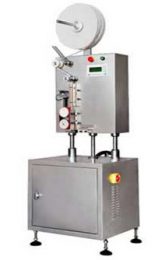


High Speed Induction Cap Sealing Machine | Automatic Induction Sealer


High Speed Induction Cap Sealing Machine
The High Speed Induction Cap Sealing Machine is an automatic electromagnetic induction sealing system designed for high-speed, non-contact sealing of bottles and containers with induction-compatible caps and aluminum foil liners. The machine creates a hermetic seal between the container mouth and the inner foil liner without direct contact between the sealing head and the bottle.
The system is suitable for continuous bottle sealing applications where product protection, tamper evidence, leakage prevention and consistent closure sealing are required. Bottles are conveyed through the machine while the induction sealing head generates electromagnetic energy to heat the foil liner and create a controlled seal.
The machine can be configured for different bottle materials, neck diameters, cap types, foil liner structures and production speeds. Stainless-steel construction, automatic bottle detection, adjustable conveyor speed, PLC-based controls and touch screen HMI can be incorporated according to the application.
It can be integrated with automatic filling, capping, labeling, coding, inspection and secondary packaging equipment to form a complete high-speed packaging line.
What Is a High Speed Induction Cap Sealing Machine?
A High Speed Induction Cap Sealing Machine is an automatic bottle sealing machine that uses electromagnetic induction to heat an aluminum foil liner positioned inside a compatible bottle cap.
The machine performs the sealing operation without direct contact between the sealing head and the container.
The primary process includes:
- Bottle infeed
- Bottle positioning
- Induction sealing
- Foil liner heating
- Hermetic seal formation
- Sealed bottle discharge
The induction sealing unit is normally installed after bottle filling and cap application. As capped bottles pass below the induction sealing head, electromagnetic energy heats the foil layer inside the cap and bonds the liner to the bottle neck.
This process provides a fast and clean method for sealing compatible plastic and glass containers.
Working Principle
Bottle Infeed
Filled and capped bottles enter the machine through an automatic conveyor system. The conveyor continuously transfers bottles toward the induction sealing section.
Bottle Positioning
Bottle guides maintain the correct bottle position and alignment under the induction sealing head. Adjustable guides can be provided for different bottle diameters and container formats.
Cap and Foil Liner
The bottle must be fitted with a suitable cap containing an induction-compatible aluminum foil liner.
The liner construction should be selected according to the bottle material, product characteristics, cap design and required sealing performance.
Bottle Detection
Sensors detect the presence of bottles before or within the sealing zone. This helps control the induction sealing process and prevents unnecessary operation when bottles are absent.
Induction Sealing
As the capped bottle passes below the induction coil, electromagnetic energy generates heat within the aluminum foil liner.
The generated heat activates the sealing layer of the liner and creates a bond with the bottle mouth.
Hermetic Seal Formation
The heated liner bonds to the container neck and forms a sealed interface. The exact sealing result depends on foil liner construction, bottle neck design, cap pressure, induction power, conveyor speed and product application.
No Bottle – No Seal
A bottle detection system can be incorporated to prevent unnecessary induction operation when a bottle is missing from the sealing position.
Sealed Bottle Discharge
After passing through the induction sealing head, the sealed bottles continue along the conveyor toward labeling, coding, inspection or secondary packaging equipment.
Salient Features
- High-speed automatic induction sealing
- Non-contact bottle sealing technology
- Suitable for continuous conveyor operation
- Aluminum foil liner sealing
- Suitable for compatible plastic and glass containers
- Adjustable conveyor speed
- Controlled induction power
- Automatic bottle detection
- No Bottle–No Seal operation
- PLC-based machine control
- Touch screen HMI
- Adjustable bottle guides
- Stainless-steel machine construction
- Easy operation and adjustment
- Consistent sealing process
- Suitable for different bottle diameters
- Optional seal inspection
- Optional foil detection
- Optional rejection system
- Integration with automatic capping and filling lines
- Suitable for pharmaceutical, food, beverage, cosmetic and chemical packaging
Main Components
- Stainless-steel machine frame
- Infeed conveyor
- Bottle guide system
- Induction sealing head
- Induction coil
- High-frequency induction generator
- Bottle detection sensors
- Conveyor drive system
- PLC control panel
- Touch screen HMI
- Power control system
- Cooling system
- Emergency stop system
- Safety guarding where required
- Discharge conveyor
- Optional foil detection system
- Optional seal inspection system
- Optional reject mechanism
Container Compatibility
The High Speed Induction Cap Sealing Machine can be configured for suitable:
- HDPE bottles
- PET bottles
- PP bottles
- Plastic containers
- Glass bottles
- Jars
- Vials and containers where compatible
- Round containers
- Selected custom-shaped containers
Container material, neck diameter, cap construction and liner material must be confirmed before selecting the induction sealing configuration.
Cap and Foil Compatibility
The sealing system is designed for caps containing suitable induction-compatible liners.
Possible liner constructions may include:
- Aluminum foil liners
- Heat-seal polymer layers
- Induction-compatible multilayer liners
- Application-specific foil liner structures
The correct liner should be selected according to the bottle material and product.
The sealing result depends on:
- Bottle neck material
- Bottle neck diameter
- Cap dimensions
- Foil liner construction
- Product characteristics
- Cap application pressure
- Induction power
- Sealing time
- Conveyor speed
Induction Sealing System
The induction sealing section consists of an induction generator and sealing head designed to generate electromagnetic energy at the required operating frequency.
The induction coil transfers energy to the foil liner without physically contacting the bottle or cap.
The sealing parameters can be adjusted according to the bottle, cap and liner combination.
Technical Specifications
| Parameter | Specification |
|---|---|
| Machine Type | High Speed Automatic Induction Cap Sealing Machine |
| Application | Bottle and Container Induction Sealing |
| Operation | Fully Automatic |
| Sealing Technology | Electromagnetic Induction Sealing |
| Container Type | Plastic / Glass / Application-Specific |
| Container Material | PET / HDPE / PP / Glass, as applicable |
| Cap Type | Induction-Compatible Screw Cap / Application-Specific |
| Liner Type | Aluminum Foil Induction Liner |
| Sealing Head | Induction Sealing Head |
| Induction Generator | High-Frequency Generator |
| Bottle Detection | Photoelectric / Proximity Sensors |
| No Bottle–No Seal | Available |
| Conveyor | Stainless-Steel Conveyor |
| Conveyor Speed | Application Dependent |
| Sealing Power | Application Dependent |
| Neck Diameter | Application Dependent |
| Production Speed | Application Dependent |
| Control System | PLC with Touch Screen HMI |
| Cooling | Air / Application-Specific Cooling |
| Construction | Stainless Steel |
| Inspection | Optional |
| Rejection System | Optional |
| Power Supply | Configuration Dependent |
Production Capacity
Production capacity depends on:
- Bottle diameter
- Bottle height
- Neck diameter
- Induction sealing power
- Sealing time
- Conveyor speed
- Bottle spacing
- Cap and liner construction
- Required sealing quality
- Number of containers processed per minute
High-speed induction sealing systems can be configured for continuous automatic production lines. The actual output should be established through application testing using the customer’s bottle, cap and induction liner.
The final production capacity should therefore be confirmed according to the complete bottle packaging configuration.
Sealing Performance
Sealing performance depends on the correct combination of:
- Bottle material
- Bottle neck finish
- Cap dimensions
- Foil liner construction
- Induction power
- Sealing time
- Cap application
- Conveyor speed
Correctly selected induction parameters help produce a consistent seal across the required production range.
The final sealing parameters should be established through machine trials with actual production bottles, caps and liners.
Bottle Handling
The automatic conveyor system maintains continuous bottle movement through the induction sealing section.
Adjustable bottle guides can be provided according to container diameter and height.
The bottle handling system should maintain consistent spacing and alignment to ensure that each cap passes through the effective sealing area.
For high-speed applications, bottle spacing and conveyor stability are important factors in maintaining consistent sealing performance.
Sealing Control
The machine can provide adjustable control of the induction sealing process.
Depending on the configuration, operators can adjust or monitor:
- Induction power
- Sealing time
- Conveyor speed
- Bottle detection
- Machine status
- Alarm conditions
- Production parameters
The PLC and HMI can provide centralized control of the machine operation.
Seal Inspection and Rejection
Optional inspection systems can be integrated for applications requiring additional seal verification.
Possible systems include:
- Foil presence detection
- Cap presence detection
- Seal inspection
- Bottle inspection
- Vision inspection
- Automatic reject system
Inspection requirements depend on the product, packaging specification and customer’s quality-control procedure.
Hygiene and Cleaning
The machine can be designed with stainless-steel construction suitable for pharmaceutical, food, beverage, cosmetic and other packaging environments.
Routine cleaning may include:
- Conveyor cleaning
- Bottle guide cleaning
- Induction-head area cleaning
- Sensor cleaning
- Machine-frame cleaning
- Removal of product or packaging material residue
- Electrical enclosure inspection
The cleaning procedure should be established according to the product and plant hygiene requirements.
Optional Features
The machine can be configured with:
- Automatic bottle detection
- No Bottle–No Seal
- Servo-driven conveyor
- Variable-speed conveyor
- Touch screen HMI
- Recipe management
- Foil presence detection
- Cap presence detection
- Seal inspection
- Vision inspection
- Automatic reject system
- Reject collection conveyor
- Online batch coding
- Inkjet printer
- Laser coder
- Barcode or QR code printing
- Bottle unscrambler integration
- Automatic filling-line integration
- Automatic capping-machine integration
- Labeling-machine integration
- Tamper-evident packaging integration
- Special container handling systems
Packaging Line Integration
The High Speed Induction Cap Sealing Machine can be integrated into a complete automatic bottle packaging line.
A typical configuration may include:
Bottle Unscrambler → Bottle Washing/Rinsing → Filling → Capping → Induction Sealing → Coding → Labeling → Inspection → Cartoning / Shrink Wrapping
The exact line arrangement depends on the product, container, cap, production speed and packaging requirements.
The induction sealing machine can also be installed as a standalone unit in an existing automatic bottle packaging line.
Applications
Pharmaceutical Industry
- Syrups
- Oral liquids
- Pharmaceutical solutions
- Nutraceutical products
- Healthcare liquids
- Suitable pharmaceutical containers
Food Industry
- Sauces
- Pickles
- Spreads
- Edible products
- Food ingredients
- Suitable packaged food products
Beverage Industry
- Liquid beverages
- Juice products
- Health beverages
- Nutraceutical beverages
- Suitable bottled beverages
Cosmetic and Personal Care Industry
- Shampoo
- Lotion
- Cream
- Hair-care products
- Personal-care liquids
- Cosmetic formulations
Chemical Industry
- Household chemicals
- Industrial chemicals
- Agricultural products
- Specialty chemicals
- Suitable liquid chemical products
Industries Served
- Pharmaceutical Industry
- Nutraceutical Industry
- Food Industry
- Beverage Industry
- Cosmetic Industry
- Personal Care Industry
- Chemical Industry
- Healthcare Products
- FMCG Packaging
- Contract Packaging
Benefits
- High-speed automatic bottle sealing
- Non-contact sealing process
- Consistent foil sealing
- Reduced manual handling
- Improved product protection
- Helps prevent leakage
- Provides tamper-evident packaging when properly configured
- Suitable for continuous production
- Flexible bottle-format configuration
- Easy integration with filling and capping lines
- Reduced packaging intervention
- Suitable for multiple industries
- PLC-based operation
- Optional inspection and rejection
Changeover
Changeover requirements depend on the bottle and cap format.
Typical adjustments may include:
- Bottle guide width
- Conveyor height
- Induction-head height
- Sealing-head position
- Conveyor speed
- Sealing parameters
- Bottle spacing
- Container handling components
Change parts can be provided where multiple bottle formats are required.
Actual changeover requirements should be confirmed according to the number and dimensions of bottle formats.
Construction
The High Speed Induction Cap Sealing Machine can be manufactured with stainless-steel construction suitable for industrial packaging environments.
The machine frame, conveyor structure, bottle guides and accessible external surfaces can be designed for easy operation and cleaning.
Electrical and induction components are housed within the appropriate control and machine enclosures.
The final material and construction specification should be confirmed according to the customer’s product, industry and operating environment.
Safety Features
Depending on the final configuration, safety provisions can include:
- Emergency stop
- Electrical overload protection
- Bottle detection sensors
- No Bottle–No Seal
- Safety guarding where required
- Machine-stop sensors
- Electrical protection
- Generator protection
- Cooling-system monitoring
- Over-temperature protection where applicable
The final safety arrangement depends on the machine configuration and applicable site requirements.
Cleaning & Maintenance
Regular maintenance may include:
- Cleaning the conveyor
- Cleaning bottle guides
- Inspecting the induction sealing head
- Checking the induction coil
- Inspecting cooling arrangements
- Checking sensors
- Inspecting conveyor components
- Checking electrical connections
- Verifying HMI and PLC operation
- Checking emergency-stop functions
- Inspecting machine guards
Maintenance schedules should be established according to operating hours, production environment and manufacturer’s recommendations.
Machine Selection Requirements
For selecting the correct High Speed Induction Cap Sealing Machine configuration, provide:
- Product type
- Bottle material
- Bottle capacity
- Bottle dimensions
- Bottle neck diameter
- Cap type
- Cap dimensions
- Foil liner specification
- Required sealing width
- Required production speed
- Bottles per minute or bottles per hour
- Existing conveyor height
- Available electrical supply
- Existing filling machine
- Existing capping machine
- Required coding or inspection
- Existing packaging-line layout
Bottle samples, cap samples and induction foil liner samples are useful for final machine selection and testing.
Why Choose This High Speed Induction Cap Sealing Machine?
This machine provides an automatic, non-contact induction sealing process for compatible bottles and containers.
The continuous conveyor arrangement allows bottles to move through the sealing section without requiring manual handling between individual sealing operations.
The machine can be configured around the actual bottle, cap, liner and production requirement. Parameters such as conveyor speed, induction power and sealing arrangement can be selected according to the application.
It can also be integrated with filling, capping, coding, labeling and inspection equipment to support complete automatic packaging lines.
Why Choose Multipack Machinery?
Multipack Machinery manufactures and supplies automatic packaging machinery for pharmaceutical, food, beverage, cosmetic, nutraceutical and chemical applications.
For induction sealing applications, the machine configuration can be developed according to the customer’s actual container and closure requirements rather than using one fixed configuration for every application.
Configuration can include:
- Bottle handling
- Conveyor system
- Induction sealing head
- Induction generator
- Sealing power
- Bottle detection
- Cap and liner compatibility
- PLC and HMI controls
- Inspection
- Rejection
- Coding
- Filling-line integration
- Capping-line integration
- Labeling-line integration
The machine can be supplied as a standalone induction sealing machine or integrated into a complete automatic packaging line.
Frequently Asked Questions
What is a High Speed Induction Cap Sealing Machine?
It is an automatic bottle sealing machine that uses electromagnetic induction to heat an aluminum foil liner inside a compatible cap and create a seal on the bottle mouth.
How does induction cap sealing work?
The capped bottle passes under an induction sealing head. Electromagnetic energy heats the aluminum foil liner inside the cap, activating the heat-sealing layer and bonding it to the bottle neck.
Which bottles can be sealed?
The machine can be configured for compatible PET, HDPE, PP, glass and other suitable container materials, depending on the liner and cap construction.
Which caps can be used?
Suitable screw caps or other compatible closure systems containing induction-compatible liners can be used. The cap and liner must be selected according to the bottle neck and sealing application.
Is induction sealing a contactless process?
Yes. The induction sealing head generates electromagnetic energy without directly contacting the bottle or cap during the sealing process.
Can the machine operate at high speed?
Yes. The machine is designed for continuous automatic conveyor operation and can be configured according to the required production speed and container format.
Does it have No Bottle–No Seal?
A No Bottle–No Seal system can be incorporated to prevent unnecessary sealing operation when a bottle is not detected in the sealing area.
Can it seal both plastic and glass bottles?
Yes, suitable plastic and glass containers can be processed when the cap and induction liner are compatible with the container material and neck design.
Can foil presence be detected?
Yes. Optional foil or cap inspection systems can be incorporated depending on the required quality-control process.
Can the machine be integrated with a filling and capping line?
Yes. The induction sealing machine can be installed after the filling and capping stages and integrated with coding, labeling, inspection and secondary packaging equipment.
Can the machine be customized?
Yes. Conveyor configuration, bottle handling, induction power, sealing head arrangement, control system, inspection and production capacity can be configured according to the application.
Looking for a High Speed Induction Cap Sealing Machine for your automatic bottle packaging line?
Share your bottle material, bottle size, neck diameter, cap type, induction liner specification and required production output with the Multipack Machinery technical team.
Multipack Machinery can recommend a suitable induction sealing configuration for your bottle, cap and production requirements.
Contact Multipack Machinery for machine configuration and quotation.