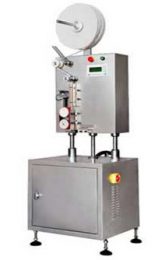


Bottle Induction Cap Sealing Machine | Automatic Bottle Induction Sealer

Bottle Induction Cap Sealing Machine
The Bottle Induction Cap Sealing Machine is designed for sealing compatible bottles and containers with aluminum foil induction liners using electromagnetic induction technology. The machine creates a secure inner seal beneath the cap without direct contact between the sealing head and the foil liner.
The induction sealing process helps provide leak protection, tamper-evident packaging and protection against external contamination. It is suitable for pharmaceutical, nutraceutical, food, beverage, cosmetic, chemical, agrochemical and FMCG packaging applications.
The machine can be used as an online sealing unit within an automatic packaging line or configured according to the required bottle, cap, liner, neck diameter and production speed. Compatible plastic and glass containers can be processed when the cap and induction liner are correctly matched to the container.
The Bottle Induction Cap Sealing Machine can be supplied with adjustable sealing parameters, bottle guides, conveyor integration and suitable cooling arrangements according to the application and production requirements.
What Is a Bottle Induction Cap Sealing Machine?
A Bottle Induction Cap Sealing Machine is a non-contact bottle sealing machine that uses electromagnetic induction to heat an aluminum foil liner placed inside a compatible cap.
When the capped bottle passes through the induction sealing head, the electromagnetic field heats the foil liner. The heat activates the sealing layer on the liner, bonding it to the bottle neck and creating an inner seal.
This process can provide a hermetic or leak-resistant seal when the bottle, cap, liner and sealing parameters are correctly matched. It is commonly used where product protection and tamper evidence are important.
Working Principle
Bottle Infeed
Capped bottles enter the induction sealing machine through the conveyor system.
Bottle Positioning
Bottle guides maintain the correct position and alignment as the container moves through the sealing area.
Cap and Induction Liner
The bottle is fitted with a compatible cap containing an aluminum foil induction liner.
Induction Heating
The bottle passes below the induction sealing head, which generates a high-frequency electromagnetic field.
Foil Heating
The electromagnetic field induces heat in the aluminum foil layer of the liner.
Liner Bonding
The heat activates the sealing layer on the liner and bonds it to the bottle neck.
Cooling
The sealed liner cools and forms the required bond with the container opening.
Bottle Discharge
The sealed bottle continues along the conveyor toward labeling, coding, inspection or secondary packaging.
Salient Features
- Automatic bottle induction sealing
- Non-contact sealing technology
- Aluminum foil liner sealing
- Leak-resistant inner seal
- Tamper-evident packaging capability
- Continuous conveyor operation
- Adjustable sealing parameters
- Adjustable sealing head height
- Suitable for different bottle formats
- Suitable for compatible plastic and glass containers
- Digital control system
- Bottle presence detection
- Automatic line integration
- Compact inline configuration
- Stainless steel construction
- Suitable for continuous production
- Optional air or water cooling
- Optional seal inspection and rejection
- Easy integration with filling and capping machines
Main Components
Stainless Steel Machine Frame
Rigid frame construction supports the conveyor, induction generator, sealing head and control components.
Conveyor System
The conveyor continuously transports bottles through the induction sealing zone.
Induction Generator
The generator supplies the electrical energy required to produce the electromagnetic field.
Induction Sealing Head
The sealing head creates the electromagnetic field required to heat the aluminum foil liner.
Bottle Guide System
Adjustable guides maintain bottle alignment beneath the sealing head.
Height Adjustment System
The sealing head can be adjusted according to bottle and cap height.
Control Panel
The control panel allows operators to start, stop and adjust relevant machine parameters.
Sensors
Sensors can detect bottle presence and monitor machine operation.
Cooling System
Depending on the machine configuration and production requirement, air or water cooling can be provided for stable continuous operation.
Bottle Compatibility
The Bottle Induction Cap Sealing Machine can be configured for compatible containers such as:
- HDPE bottles
- LDPE bottles
- PET bottles
- PP bottles
- PP jars
- Plastic containers
- Glass bottles with suitable plastic caps
- Pharmaceutical bottles
- Food containers
- Cosmetic containers
- Chemical containers
Induction sealing performance depends on the container material, neck finish, cap design and liner construction. Existing induction-sealing systems commonly support PET, HDPE, LDPE, PP and suitable glass-container applications.
Cap and Liner Compatibility
The machine is designed for compatible caps containing induction liners.
Typical liner construction can include:
- Aluminum foil
- Heat-sealing layer
- Backing material
- Adhesive or polymer sealing layer
The sealing layer must be compatible with the container material.
Cap diameter, neck finish, liner construction and contact between the liner and bottle neck are important factors in achieving consistent sealing.
Induction Sealing System
The induction sealing system uses electromagnetic energy to heat the aluminum foil liner without physical contact.
Important operating parameters include:
- Induction power
- Conveyor speed
- Sealing head height
- Neck diameter
- Cap and liner construction
- Container material
- Sealing time
- Bottle spacing
The correct parameters should be established through trials using the actual bottles, caps and liners.
Technical Specifications
| Parameter | Specification |
|---|---|
| Machine Type | Bottle Induction Cap Sealing Machine |
| Operation | Automatic / Continuous |
| Sealing Method | Electromagnetic Induction |
| Sealing Type | Aluminum Foil Liner Sealing |
| Sealing Process | Non-Contact |
| Bottle Handling | Automatic Conveyor |
| Bottle Material | PET / HDPE / LDPE / PP / Glass, as applicable |
| Cap Type | Compatible Screw / Snap-On Cap with Induction Liner |
| Neck Diameter | As per customer requirement |
| Sealing Head | Induction Head |
| Head Height | Adjustable |
| Production Capacity | Application dependent |
| Conveyor Speed | Application dependent |
| Cooling | Air / Water, as required |
| Control System | Digital Control / PLC as required |
| Machine Construction | Stainless Steel |
| Bottle Detection | Sensor Based |
| Line Integration | Available |
Production Capacity
Production capacity depends on:
- Bottle neck diameter
- Bottle dimensions
- Cap and liner construction
- Conveyor speed
- Sealing power
- Required sealing time
- Bottle spacing
- Upstream and downstream machine speeds
The machine can be configured to match the required packaging-line speed.
Actual production capacity and sealing performance should be confirmed through trials with the customer’s bottles, caps and induction liners.
Sealing Quality
Consistent induction sealing requires proper matching of the:
- Bottle
- Cap
- Induction liner
- Neck finish
- Sealing head
- Induction power
- Conveyor speed
- Head height
Correct setup can help achieve a consistent inner seal, reduce leakage risk and provide tamper-evident packaging.
Improper liner selection, uneven bottle necks, incorrect sealing distance or unsuitable operating parameters can affect sealing quality.
Bottle Handling
The conveyor transports capped bottles continuously through the induction sealing zone.
Adjustable bottle guides can be provided according to:
- Bottle diameter
- Bottle height
- Bottle shape
- Neck position
- Conveyor width
- Production speed
Correct bottle alignment helps maintain a consistent distance between the induction head and the cap.
Cap and Liner Handling
The induction sealer normally receives bottles after the cap has already been applied.
A typical sequence is:
Bottle Filling → Cap Placement → Capping → Bottle Induction Cap Sealing → Inspection
The induction sealing machine seals the liner beneath the cap rather than performing the primary cap-tightening operation.
Inspection and Quality Control
Inspection systems can be added according to application requirements.
Possible checks include:
- Bottle presence
- Cap presence
- Seal presence
- Missing liner
- Seal integrity
- Incorrect bottle position
- Machine fault
Vision-based inspection and automatic rejection can also be integrated where required.
Coding and Batch Marking
The Bottle Induction Cap Sealing Machine can operate alongside coding equipment for printing:
- Batch number
- Manufacturing date
- Expiry date
- MRP
- Product code
- Lot number
- Variable information
Coding can be positioned before or after induction sealing depending on the complete packaging-line arrangement.
Hygiene and Cleaning
The machine can be manufactured with accessible stainless steel surfaces for easier cleaning.
Routine cleaning may include:
- Conveyor surfaces
- Bottle guides
- Induction head exterior
- Machine frame
- Sensors
- Accessible sealing-area components
Cleaning procedures should be selected according to the product and industry requirements.
Optional Features
The machine can be configured with:
- Digital power adjustment
- PLC control
- HMI interface
- Automatic bottle detection
- Cap presence detection
- Seal inspection
- Automatic rejection
- Vision inspection
- No bottle-no seal function
- Production counter
- Recipe storage
- Adjustable sealing head
- Variable conveyor speed
- Air cooling
- Water cooling
- Custom conveyor
- SS304 construction
- SS316 construction where required
- Line communication and integration
Packaging Line Integration
The Bottle Induction Cap Sealing Machine can be installed as part of an automatic packaging line.
A typical sequence may include:
Bottle Unscrambling → Bottle Washing → Filling → Capping → Bottle Induction Cap Sealing → Inspection → Labeling → Coding → Secondary Packaging
The exact sequence depends on the product, bottle, cap, production speed and required automation level.
Applications
Pharmaceutical Industry
Suitable for compatible pharmaceutical containers used for:
- Syrups
- Oral liquids
- Nutraceutical products
- Healthcare products
- Pharmaceutical formulations
Food Industry
Suitable for:
- Edible oils
- Sauces
- Ketchup
- Honey
- Spreads
- Food ingredients
- Processed food products
Beverage Industry
Suitable for compatible beverage bottles requiring an induction-sealed inner liner.
Cosmetic Industry
Suitable for:
- Shampoo
- Hair oil
- Lotion
- Cream
- Gel
- Personal care products
Chemical Industry
Suitable for compatible containers used for:
- Lubricants
- Cleaning chemicals
- Industrial formulations
- Agrochemical products
- Specialty chemicals
Industries Served
- Pharmaceutical
- Nutraceutical
- Food
- Beverage
- Cosmetic and Personal Care
- Chemical
- Agrochemical
- Herbal Products
- FMCG
- Contract Packaging
- Consumer Products
Benefits
- Non-contact induction sealing
- Automatic bottle sealing
- Consistent foil liner bonding
- Leak-resistant inner seal
- Tamper-evident packaging capability
- Reduced manual sealing
- Continuous operation
- Suitable for automatic packaging lines
- Flexible bottle compatibility
- Adjustable sealing parameters
- Improved product protection
- Reduced contamination risk
- Easy integration with filling and capping systems
- Compact inline installation
- Suitable for multiple industries
Changeover
Changeover depends on differences between bottle and cap formats.
Typical adjustments include:
- Sealing head height
- Bottle guide width
- Conveyor settings
- Bottle spacing
- Sealing power
- Conveyor speed
- Sensor positions
- Induction parameters
Different bottle and liner combinations may require separate trials to establish the correct sealing parameters.
Construction
The machine can be manufactured in stainless steel construction suitable for industrial packaging environments.
SS304 can be considered for general applications, while SS316 or other material requirements can be evaluated according to the process and product requirements.
Machine dimensions, conveyor height and sealing-head arrangement can be customized according to the packaging line.
Safety Features
Depending on the configuration, safety provisions may include:
- Emergency stop
- Electrical protection
- Generator protection
- Overload protection
- Thermal protection
- Protective guarding
- Bottle jam detection
- Sensor-based control
- Cooling system monitoring
- Fault indication
- Sealing-head protection
Safety provisions can be customized according to machine configuration and applicable requirements.
Cleaning & Maintenance
Regular maintenance helps maintain stable sealing performance.
Recommended maintenance includes:
- Cleaning the induction head exterior
- Checking sealing-head alignment
- Inspecting bottle guides
- Cleaning conveyor surfaces
- Checking sensors
- Inspecting electrical connections
- Checking cooling arrangements
- Inspecting control components
- Checking conveyor movement
- Cleaning accessible machine surfaces
The induction generator and electrical components should be maintained according to the manufacturer’s recommended procedures.
Machine Selection Requirements
Before selecting a Bottle Induction Cap Sealing Machine, consider:
- Bottle material
- Bottle diameter
- Bottle height
- Neck diameter
- Neck finish
- Cap diameter
- Cap material
- Liner construction
- Required sealing speed
- Required production capacity
- Conveyor height
- Bottle spacing
- Existing filling machine
- Existing capping machine
- Downstream labeling equipment
- Available installation space
- Inspection requirements
Bottle, cap and liner samples are recommended for final machine selection and sealing trials.
Why Choose This Machine?
The Bottle Induction Cap Sealing Machine provides a controlled non-contact method of creating an inner foil seal on compatible bottles after capping.
It combines continuous bottle handling with electromagnetic induction technology to provide consistent sealing without direct contact between the sealing head and liner. This makes it suitable for packaging operations where product protection, leakage prevention and tamper evidence are important.
The machine can be configured according to bottle dimensions, cap and liner specifications, production speed and existing packaging-line requirements.
Why Choose Multipack Machinery?
Multipack Machinery provides packaging machinery solutions for pharmaceutical, food, beverage, cosmetic, nutraceutical, chemical and FMCG applications.
The Bottle Induction Cap Sealing Machine can be configured according to:
- Bottle and cap specifications
- Liner construction
- Neck diameter
- Required production speed
- Sealing requirements
- Conveyor layout
- Existing filling and capping equipment
- Inspection requirements
- Automation level
Customer bottle, cap and liner samples can be evaluated to determine suitable machine configuration and sealing parameters.
Frequently Asked Questions
What is a Bottle Induction Cap Sealing Machine?
It is a machine that uses electromagnetic induction to heat an aluminum foil liner inside a compatible cap and bond it to the bottle neck.
How does bottle induction sealing work?
The capped bottle passes beneath an induction sealing head. Electromagnetic energy heats the aluminum foil liner, activating its sealing layer and bonding it to the container neck.
Does the induction sealing head touch the bottle?
No. Induction sealing is a non-contact process. The electromagnetic field heats the foil liner through the cap.
Does the machine apply the bottle cap?
The induction sealer normally performs the inner foil sealing operation after the cap has been applied. A separate capping system is generally used upstream.
What bottles can be induction sealed?
Compatible PET, HDPE, LDPE, PP and suitable glass containers can be considered. Final compatibility depends on the bottle, cap and liner combination.
What type of liner is required?
The cap requires a compatible induction liner containing an aluminum foil layer and a sealing layer suitable for the bottle material.
Can glass bottles be induction sealed?
Yes, suitable glass containers can be induction sealed when used with a compatible cap, liner and sealing configuration.
What affects induction sealing quality?
Bottle neck finish, liner construction, cap design, induction power, sealing-head height, conveyor speed and bottle alignment all affect sealing performance.
Can the machine be integrated with a filling line?
Yes. The machine can be integrated with filling, capping, labeling, coding and inspection equipment.
Can different bottle sizes be handled?
Yes. Different bottle formats can be handled through suitable guide and sealing-head adjustments. Some applications may require additional change parts or setup.
Can seal inspection be added?
Yes. Seal inspection, vision inspection and automatic rejection systems can be incorporated according to the application.
What production speed can be achieved?
Production speed depends on bottle neck diameter, liner construction, sealing requirements, conveyor speed and the complete packaging line. Final capacity should be confirmed through trials.
Contact Multipack Machinery for a Bottle Induction Cap Sealing Machine configured for your bottle, cap, induction liner, sealing requirements and production speed.